April 2026 – The irony is almost poetic. Elon Musk, the self‑anointed “Dogefather,” still tweets about Dogecoin. He changes his profile picture to a Shiba Inu. He drops cryptic one‑liners about “Doge to the moon.” And the Dogecoin chart… barely flinches. A 2% bump, maybe. A few minutes of confusion. Then silence.
Between 2019 and 2021, those same tweets triggered 50%+ parabolic spikes in a matter of hours. A single “ᴰᵒᵍᵉ” from Musk could add billions of dollars to Dogecoin’s market capitalization. It was an unprecedented financial phenomenon: a single individual, armed with 280 characters, acting as a de facto central bank for a decentralized cryptocurrency.
Today, that magic is gone. The “Elon Pump” is dead.
For retail investors who bought at the top of the 2021 SNL hype, this feels like a betrayal. For market purists, it feels like the return of sanity. This article deconstructs the psychology of the pump, the mechanics of its death, and why Dogecoin’s decoupling from Elon Musk is the single most important milestone in its evolution from a speculative toy into a legitimate global currency.
The Golden Era (2019–2021): Anatomy of the “Elon Pump”
Historical Context: From Meme to Maelstrom
Before 2019, Dogecoin was a sleepy internet relic—fun, cheap, and largely ignored by mainstream finance. Then Elon Musk began his courtship.
| Date | Event | Immediate DOGE Price Reaction |
|---|---|---|
| April 2019 | Musk changes Twitter bio to “CEO of Dogecoin” | +30% within hours |
| July 2020 | Musk tweets “It’s inevitable” (meme) | +20% |
| December 2020 | “One word: Doge” | +50% |
| February 2021 | Musk tweets “Dogecoin is the people’s crypto” | +60% |
| May 2021 | SNL “The Dogefather” sketch | Peaked at ~$0.73, then crashed |
The SNL event was the peak of the phenomenon. Leading into the show, DOGE had already rallied from $0.05 to $0.70 on pure anticipation. During the sketch, Musk jokingly called Dogecoin a “hustle.” The market interpreted it as a sell signal, and DOGE collapsed 40% in 24 hours. But even that crash was driven by Musk’s words. His tweets were the single most important price catalyst in crypto—surpassing Bitcoin halvings, exchange listings, or regulatory news.
Behavioral Economics: Herd Mentality and Asymmetric Information
Why did a single individual hold such power? The answer lies in two behavioral finance concepts:
- Asymmetric Information: Retail investors believed Elon Musk had inside knowledge. They speculated (without evidence) that Tesla would accept DOGE, that SpaceX would send a DOGE satellite to the moon, that Musk would integrate DOGE into Starlink or The Boring Company. Every tweet was interpreted as a “signal” of imminent utility. When you believe someone has privileged information, you follow their public statements with religious fervor.
- Herd Mentality (Informational Cascade): When the first few traders bought DOGE after a Musk tweet, the price moved. Others saw the movement and assumed those early buyers knew something they didn’t. They bought in turn, creating a self‑reinforcing cascade. The fear of missing out (FOMO) overwhelmed any rational analysis of Dogecoin’s fundamentals (or lack thereof).
Crucially, there was no counter‑narrative. No major news outlet was publishing bearish Dogecoin analysis. No institution was shorting DOGE aggressively. The entire information environment was a one‑way bull run fueled by Musk’s megaphone.
Liquidity Depth: The Math of a Low‑Cap Rocket
The most important—and most overlooked—factor was market capitalization. In early 2019, Dogecoin’s market cap hovered around $200–300 million. By early 2021, before the SNL peak, it had grown to roughly $5–10 billion. Still tiny by global financial standards.
To understand why a tweet could move DOGE so dramatically, consider the basic mechanics of price movement:
Price movement ≈ (Incoming buy volume) / (Liquidity depth)
When a market cap is small, liquidity is thin. There are fewer limit orders sitting on order books. A relatively modest influx of retail buying—say, $10 million spread across thousands of panicked FOMO traders—can absorb the available sell orders and push the price up 30–50% in minutes.
Musk’s tweets acted as a coordination mechanism. They didn’t just cause buying; they caused simultaneous buying from hundreds of thousands of retail traders who had previously been sitting on the sidelines. This sudden demand spike overwhelmed the thin liquidity, producing the infamous “vertical candles” that made Dogecoin famous.
As Dogecoin’s market cap grew, the same $10 million injection moved the price less and less. By 2024, with DOGE trading above $10 billion, the effect was diluted. By 2026, with a market cap of $15–20 billion, a Musk tweet generates a mere ripple—not a tsunami.
The Decoupling: Why the Magic Faded (2022–2026)
The “Boy Who Cried Wolf” Syndrome
In marketing, there is a well‑documented principle of diminishing marginal returns. The first advertisement for a product has the highest impact. The hundredth advertisement, repeating the same message, has a fraction of the effect.
Musk’s Dogecoin tweets suffered the same fate. Between 2019 and 2021, his Dogecoin references were relatively rare—a few per year, each one a “special event.” By 2024–2025, he was tweeting about DOGE almost weekly. The novelty wore off. The market became desensitized.
Worse, many of Musk’s “promises” never materialized. He teased Tesla accepting DOGE for cars (only merchandise ever materialized). He teased a “Dogecoin wallet” on X (still not fully live in 2026). Each unfulfilled promise reduced the credibility of subsequent tweets. The market learned that a Musk tweet was cheap talk—signal without substance.
Market Cap Gravity: The Mathematical Ceiling
This is the most brutal reality: pumping a $20 billion asset requires billions of dollars of real, sustained buy pressure. A tweet can generate a temporary spike in retail enthusiasm, but it cannot force institutions, market makers, and algorithmic traders to hold their positions.
Let’s run the numbers. To move Dogecoin from $0.10 to $0.15 (a 50% increase) in a single day, you would need to absorb approximately $1.5–2.5 billion in sell orders (depending on liquidity depth). Even if Musk’s tweet triggered $500 million in retail buying, that’s only 20–30% of the required volume. The remaining sell pressure from profit‑takers, whales, and arbitrage bots would cap the move.
Compare this to 2019, when DOGE’s market cap was $200 million. A 50% move required only $20–40 million in buy pressure—easily achievable from a coordinated retail rush. The math simply stopped working.
Institutional Arbitrage: Bots Fading the Pump
Perhaps the most decisive factor was the arrival of sophisticated market participants. By 2024–2025, every major exchange (Binance, Coinbase, Kraken) hosted algorithmic trading bots programmed to recognize pattern‑based events—including Musk’s tweets.
These bots operate on simple logic:
- Detect a Musk tweet containing “Doge,” “Dogecoin,” “Shiba,” or related keywords.
- Immediately sell a predetermined amount of DOGE (or short it via futures) into the initial retail buying frenzy.
- Capture the spread as the price spikes then recedes.
This arbitrage activity flattens the price curve. The initial pump is still visible, but it is rapidly faded by institutional sell orders. The result is a brief, shallow spike (2–5%) rather than a sustained parabolic rally.
The X (Twitter) Reality Check
Between 2022 and 2024, the market priced in a fantasy: that Musk would integrate Dogecoin into X (formerly Twitter) as a native payment method, turning DOGE into the currency of the “everything app.” This speculation drove significant buying pressure even without tweets.
By 2026, the reality has settled. X has launched “X Money,” a payment system that initially supports fiat currencies and stablecoins. Dogecoin integration remains possible but is no longer imminent. The market has adjusted expectations downward. Without a tangible catalyst, a Musk tweet about “maybe someday” carries no weight.
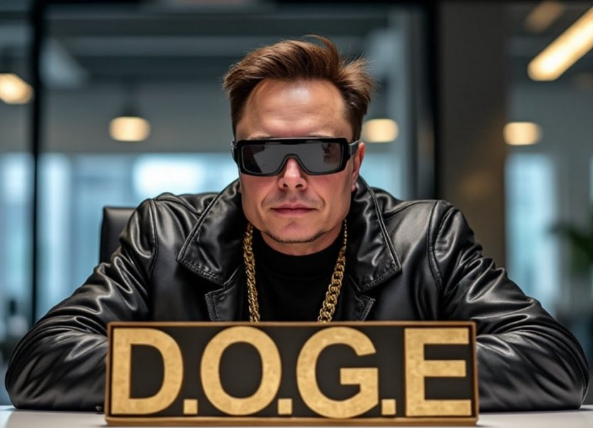
The Bull Case (PROS): Why Decoupling Is Fantastic for Dogecoin
Medium of Exchange vs. Speculative Toy
A currency cannot function if a single individual’s tweet changes its purchasing power by 30% overnight. Imagine if the Federal Reserve Chairman’s casual remarks caused the dollar to lose a third of its value in an hour. No merchant would accept it. No employee would agree to be paid in it. The entire concept of “medium of exchange” collapses under such volatility.
Dogecoin’s decoupling from Musk is the first step toward price stability—not absolute stability, but the kind of predictable, cycle‑driven volatility that businesses can hedge against. When merchants know that a tweet won’t decimate their weekend revenue, they are far more willing to accept DOGE at the point of sale.
By 2026, we are already seeing this effect. Small businesses that previously hesitated to accept DOGE because of “Elon risk” are now integrating crypto POS terminals. The volatility is still present, but it is now driven by market cycles (supply and demand) rather than the whims of a single billionaire. This is a massive upgrade for adoption.
Decentralization of Narrative
Dogecoin has always touted itself as the “people’s crypto.” But between 2019 and 2021, the narrative was anything but decentralized. It was Elon’s coin. The community celebrated his tweets, built shrines to his image, and treated every “ᴰᵒᵍᵉ” as a divine signal.
That dependency was a form of centralization risk. If Musk woke up one day and decided to attack Dogecoin (as he did briefly with Bitcoin over energy concerns), the entire ecosystem could have collapsed. A single point of failure—even a charismatic one—is antithetical to the ethos of cryptocurrency.
The decoupling returns Dogecoin to its roots. The Shibe Army is back in control. Development is driven by the Dogecoin Foundation and volunteer Core developers. Adoption is driven by merchants, payment processors, and grassroots communities. Marketing is driven by memes, not moguls.
This matters for long‑term resilience. A currency that depends on a single individual is a celebrity endorsement, not a monetary network. A currency that survives the departure (or irrelevance) of that individual is a true decentralized asset.
The Lindy Effect: Proof of Intrinsic Value
The Lindy Effect states that the longer a non‑perishable thing has existed, the longer its remaining life expectancy. Dogecoin’s ability to survive the loss of its biggest cheerleader—and continue growing its user base, merchant adoption, and development activity—is powerful evidence of intrinsic network value.
Institutional investors have long avoided Dogecoin due to “Key Man Risk.” The question was always: “What happens to DOGE when Elon loses interest?” Now we have the answer: nothing. The network continues. The community continues. The transactions continue.
This answer unlocks a new class of investors. Pension funds, family offices, and macro hedge funds require assets that are resilient to founder risk. Dogecoin, after the decoupling, qualifies. It is no longer a meme‑coin lottery ticket; it is a mature digital commodity with a 13‑year track record and a decentralized governance model.
The Bear Case (CONS): The Price of Independence
Loss of Free Global PR
Elon Musk is the most followed person on X (formerly Twitter), with over 200 million followers. Each of his Dogecoin tweets generated billions of media impressions across news outlets, social platforms, and television. This was free marketing on a scale that no crypto project could ever afford.
Without the “Elon bump,” Dogecoin must rely on organic adoption, which is much slower. Organic growth means more merchants, more payment integrations, more developer tools, and more user education. These are real, valuable activities—but they take years, not minutes.
The immediate consequence is a flattening of the hype curve. Dogecoin will likely experience fewer explosive short‑term rallies. For traders who thrived on volatility, this is a loss. For long‑term holders, it is a trade‑off: less drama, but less existential risk.
Retail Exhaustion and the Rise of New Meme Coins
Retail investors are attracted to volatility and narrative. The “Elon Pump” was a reliable narrative: buy DOGE before the next Musk tweet, sell after the spike, repeat. With that narrative dead, speculative retail capital has rotated into newer, smaller meme coins like Pepe (PEPE), Bonk (BONK), and dogwifhat (WIF).
These tokens offer what Dogecoin no longer does: low market caps (easy to pump), high volatility, and a sense of “insider opportunity.” In 2026, a single influencer tweet can still move Pepe 30% because its market cap is $1–3 billion, not $15 billion.
Dogecoin has lost its status as the casino of choice for degenerate retail traders. That is a feature for those who want a serious currency, but a bug for those who miss the dopamine hits of 2021.
Conclusion: The Maturation of a Meme
The death of the “Elon Pump” was inevitable. A currency that moves on the tweets of a single individual is not a currency; it is a celebrity stock. For Dogecoin to graduate from a speculative internet joke to a mature, macroeconomic digital asset, it had to shed that dependency.
And it has.
In April 2026, Dogecoin trades not on Musk’s whims, but on its own fundamentals: fixed emission of 5 billion DOGE per year, 1‑minute block times, sub‑penny fees, a growing merchant network, and a decentralized community that has outlasted every hype cycle.
The decoupling is not a tragedy. It is a rite of passage. Dogecoin has survived the loss of its most famous cheerleader and emerged stronger, more stable, and more legitimate.
For investors, the lesson is clear: stop watching Twitter for the next “ᴰᵒᵍᵉ.” Start focusing on utility, adoption, and self‑custody. The future of Dogecoin is no longer written in tweets. It is written in code, in nodes, and in the wallets of millions of Shibes who hold their coins not because Elon told them to, but because they believe in the original vision: Do Only Good Everyday.
🔒 Ready to secure your Dogecoin for the long term? Explore our guide to the Best Dogecoin Wallets in 2026.
Not financial advice. Past performance does not guarantee future results. Cryptocurrency markets remain highly volatile.